






My family has been baking and making chocolate for five generations; I trained as an engineer and scientist. We make chocolate with allulose every single day. This guide is everything we've learned, backed by the published research.
Allulose in 30 seconds
Allulose (D-psicose) is a "rare sugar" that tastes and behaves like table sugar but contributes almost no calories (about 0.4 kcal per gram versus 4 for sugar) and does not raise blood glucose or insulin. It's about 70% as sweet as sucrose, and the FDA excludes it from "Total Sugars" and "Added Sugars" on US nutrition labels. It's found naturally in small amounts in figs, raisins, maple syrup, and wheat.
That's the short version. But if you're considering switching your sweetener, or you've just flipped over a GOALZ bar and wondered what this ingredient actually is, the details matter. Below: where it comes from, what the studies say about blood sugar and safety, the honest answer on side effects, and why we bet our entire chocolate company on it.
What is allulose made from, and how is it made?
Allulose exists naturally in foods like figs, raisins, jackfruit, maple syrup, and wheat, but only in tiny amounts. Commercial allulose is made from fructose (usually derived from corn) using an enzyme that rearranges the fructose molecule into allulose. No artificial synthesis. It's the same molecule you'd find in a fig.
The enzyme process is called epimerization: an enzyme (D-psicose 3-epimerase) flips one part of the fructose molecule's structure, converting it into allulose. Chemically, allulose is a monosaccharide, a simple sugar in the same family as glucose and fructose. It is real sugar in the structural sense. The difference is what happens after you eat it (more on that next).
At GOALZ we use only non-GMO allulose. That matters to us because "cocoa + allulose" is essentially our entire ingredient list. When your formula is that simple, every input has to be clean.
Does allulose raise blood sugar?
No. Human studies consistently show allulose does not raise blood glucose or insulin (has little to no acute effect when consumed alone). Your body absorbs most of it in the small intestine but cannot metabolize it for energy; it's excreted unchanged, mostly in urine. That's why the FDA allows allulose to be excluded from "Total Sugars" and "Added Sugars" on the Nutrition Facts label.
In glycemic-response trials, allulose produced no meaningful rise in blood glucose or insulin on its own. Some randomized trials suggest that small doses of allulose taken with carbohydrates may modestly blunt the post-meal glucose rise (this is an active research area; we present it as promising, not proven).
In 2019 the FDA issued guidance letting manufacturers exclude allulose from sugar counts and use 0.4 kcal/g for calorie calculations, a regulatory first.
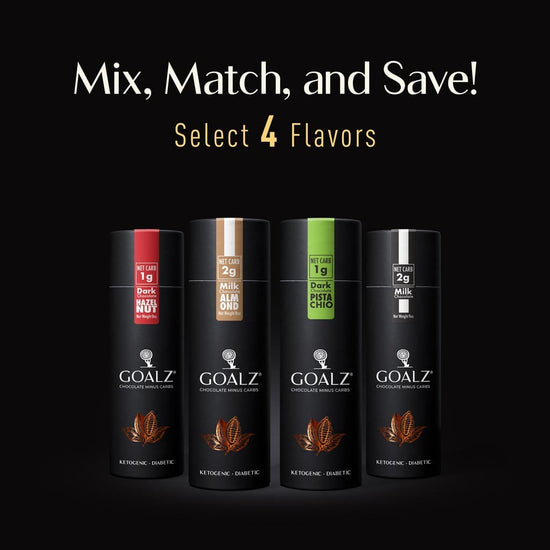
This is why a GOALZ dark chocolate bar has 1g net carbs. We sweeten with allulose instead of sugar, so the sugars that would normally spike you are not in the bar. You can see the whole lineup in our keto chocolate collection.
Is allulose safe? Is it bad for you?
Allulose is Generally Recognized as Safe (GRAS) in the United States, with FDA-reviewed safety dossiers behind that status. Human trials (including a 12-week and a 48-week study of daily consumption) found no adverse effects on weight, liver, kidney, or metabolic markers at normal intakes. The main documented downside is digestive discomfort at very high doses, like most low-digestible sweeteners.
Points worth knowing:
- GRAS status: multiple GRAS notices for allulose have gone through the FDA process without objection.
- Long-term human data: a 48-week Japanese study of daily D-allulose intake found it well tolerated with no clinically significant adverse effects.
- Metabolic research: studies have explored allulose's effects on post-meal glucose and fat metabolism, with generally favorable or neutral findings. Some emerging research (including GLP-1-related appetite work) is promising but early. We cover it in our research roundup.
- Not a medical recommendation: if you're managing diabetes or any condition, loop in your doctor. We make chocolate, not medical advice.
Why is allulose "banned" in Europe?
It isn't banned — it has simply never been authorized. In the EU, any food not widely eaten before 1997 must be approved as a "Novel Food" before sale. Allulose's application stalled: in June 2025 EFSA (Europe's food safety authority) said it could not confirm safety because the applicant stopped responding to requests for more data. Meanwhile, Australia and New Zealand fully approved allulose after their own safety review.
That's the honest story, and it's less dramatic than "banned":
- The EU's Novel Food process is precautionary paperwork, not a safety verdict against allulose.
- EFSA's June 2025 opinion didn't find harm; it found an incomplete dossier. The applicant went silent, so the panel couldn't finish the assessment. New applications remain possible, and future applicants can lean on the Australia/New Zealand approval record (FSANZ completed a full safety assessment and approved allulose).
- In the US, Japan, South Korea, Mexico, and now Australia/New Zealand, allulose is approved and sold.
So if you've seen "banned in Europe" used as a scare line, remember the same EU process also delayed chia seeds. Regulatory lag isn't a red flag.
Is allulose a sugar alcohol? Is it artificial?
No on both counts. Allulose is a monosaccharide, a true sugar like glucose or fructose, found in nature. Sugar alcohols (erythritol, maltitol, xylitol, sorbitol) are a chemically different class of sweetener, and they're behind the cooling aftertaste and digestive issues many people associate with "sugar-free" products.
This distinction is the reason GOALZ exists, so let me tell it the way it happened.
My husband Ramsey and I have been keto for years, and as a lifelong chocolate lover I tried every keto chocolate on the market. I was making keto recipes for my blog, my family has five generations of bakers and chocolatiers behind it, and I have an engineer's habit of refusing to accept a bad tradeoff. So I spent nearly two years experimenting to find the ultimate sugar-free chocolate formula.
Every sweetener failed the chocolate test except one:
- Erythritol has an unmistakable cooling effect on the tongue: fine in a mint chocolate, unbearable in a dark one. That's why so many brands add masking agents to cover it up.
- Stevia and monk fruit are intensely sweet, so they can't provide the bulk that sugar provides in a chocolate formula. They almost always get blended with a bulking agent (usually erythritol), which brings its aftertaste and, at higher doses, its bloating along for the ride.
- Maltitol (common in mainstream "sugar-free" chocolate) is poorly absorbed and ferments in the large intestine. It's the notorious gas-and-GI-distress sweetener, and it also raises blood sugar more than people expect.
Allulose was different. Real chocolate is cocoa plus sugar. Allulose is a sugar: it provides sugar-like bulk, sweetness, and mouthfeel, and most of what you absorb is excreted unchanged rather than fermented in your gut. It let me land on the simplest possible formula: cocoa + allulose. Nothing else. No sugar alcohols, no masking agents, no aftertaste to mask in the first place. That formula is now every bar in our sugar-free chocolate lineup.
Side effects: can allulose cause diarrhea, gas, or bloating?
At normal amounts, allulose is well tolerated. A controlled tolerance study found no severe GI symptoms until single doses reached about 0.4 g per kg of body weight. That's roughly 27g of allulose in one sitting for a 150-lb adult, far more than a serving of most allulose-sweetened foods. Very large doses can cause bloating or loose stools, as with any low-digestible carbohydrate.
For context, the study's recommended comfortable ceiling is ~0.4 g/kg per sitting and ~0.9 g/kg per day. A couple of squares of allulose-sweetened dark chocolate sits well below that line. And because allulose is minimally fermented by gut bacteria, unlike maltitol or sorbitol, it skips the mechanism that makes traditional sugar-free candy infamous. This is exactly the "belly ache" difference our customers write to us about (see the reviews below).
Everyone's gut is different; if you're new to allulose, start with normal portions and see how you feel. That's just sensible with any dietary change. (And if you're determined to find your personal limit, do it on a weekend when you have no other plans.)
Is allulose keto? Does it break a fast?
Yes, allulose is keto-friendly: it doesn't raise blood glucose or insulin, and it counts as 0g net carbs for practical purposes. For fasting, most people who fast for metabolic reasons treat allulose as fast-friendly since it doesn't trigger a glycemic or insulin response, though strict "nothing but water" fasters will exclude it by definition.
On a label, allulose may appear under Total Carbohydrates but is excluded from sugars; subtract it fully when computing net carbs.
Verdict: allulose is suitable for KETO, low-carb, and diabetic diets.
What does allulose taste like? Is there an aftertaste?
Allulose tastes like sugar: clean, rounded sweetness at about 70% of sugar's intensity, with no cooling effect and no bitter or metallic aftertaste. In blind taste tests, allulose-sweetened chocolate is hard to distinguish from sugar-sweetened chocolate.
I can say that with a straight face because we ran those taste tests, repeatedly, on the most demanding audience I know: chocolate lovers who didn't want to be sold a compromise. There were plenty of failed batches along the way, until we perfected the refinement process and dialed in the exact allulose ratio for our dark chocolate. By the end, the hard part (I kid you not) was telling our bars apart from sugar-loaded European chocolate.
Our customers keep confirming it:
"All the fun of chocolate, without the yucky sugar spikes or belly aches. After trying all the other 'sugar free' chocolates but not liking the sugar alcohols, I finally decided to try these and am such a FAN." — Melanie Brown, verified review
"Surprisingly creamy — smooth, rich, and not at all dry or waxy like some sugar-free options… avoids that artificial aftertaste, which is usually a dealbreaker for me." — verified review
There are hundreds more on our reviews page.
Baking and cooking with allulose
Allulose measures and bakes much like sugar: it dissolves well, browns (even faster than sugar), keeps baked goods moist, and doesn't crystallize into grittiness. Use about 1.4 cups of allulose per cup of sugar to match sweetness, and expect faster browning, so lower oven temperature slightly or shorten bake times.
One hard-won note from our kitchen: allulose responds to high heat differently than sucrose. In chocolate-making, that meant our traditional five-generation refinement process had to be re-engineered for allulose. The molecule's temperature behavior is its own animal, and it cost us many failed batches to master. In home baking the stakes are lower: watch your bake times and you'll be fine.
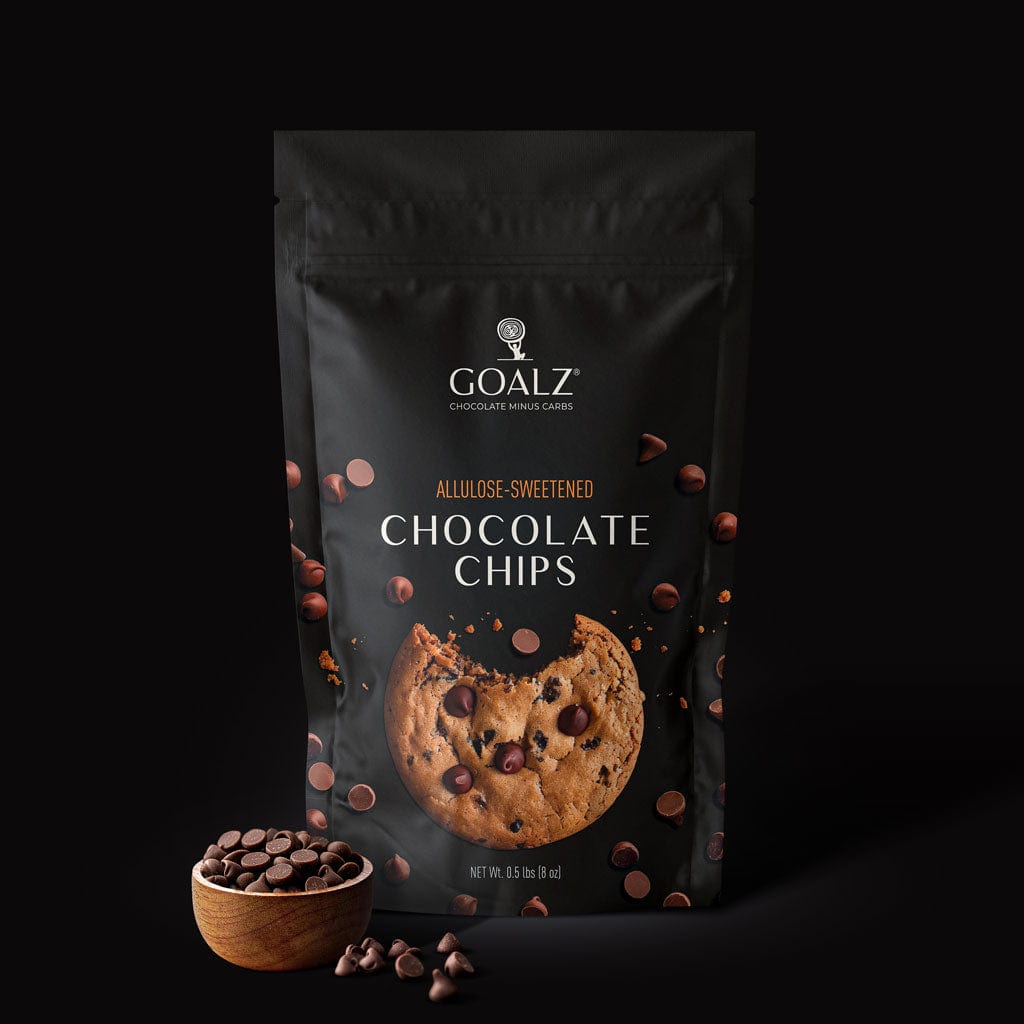
Full guide: Baking & Cooking with Allulose. Want to bake with it? Start with our allulose sweetener and sugar-free chocolate chips.
Allulose vs. erythritol, stevia, and monk fruit
Quick version: allulose is the only one of the four that is an actual sugar, which is why it's the only one that tastes and bakes like sugar with no cooling effect or bitterness. Erythritol is a sugar alcohol with a cooling aftertaste; stevia and monk fruit are high-intensity extracts that need bulking agents and can taste bitter at higher levels.
| Allulose | Erythritol | Stevia | Monk fruit | |
|---|---|---|---|---|
| What it is | Rare sugar (monosaccharide) | Sugar alcohol | Plant extract (steviol glycosides) | Fruit extract (mogrosides) |
| Sweetness vs sugar | ~70% | ~70% | 200–300× | 150–250× |
| Aftertaste | None | Cooling | Bitter/licorice at higher doses | Mild fruity |
| Bakes like sugar | Yes | Partially (crystallizes, cools) | No (needs bulking agent) | No (needs bulking agent) |
| Blood sugar impact | None | None | None | None |
Deep dive: Allulose vs. Stevia vs. Monk Fruit.
Where to buy allulose (and things made with it)
Allulose is sold in the US as granulated sweetener, syrup, and as the sweetener in a growing number of packaged foods, including chocolate. Look for non-GMO sourcing and, in blends, check what else is in the bag (many "allulose blends" are mostly erythritol).
One honest note first: allulose is expensive. It costs several times the price of sugar, and more than erythritol. That's the real reason most "sugar-free" brands still reach for cheaper sugar alcohols, and part of why allulose-sweetened products cost more. We think the taste is worth it, but you deserve to know why the bag costs what it costs.
If you want to try it the way we think it shines:
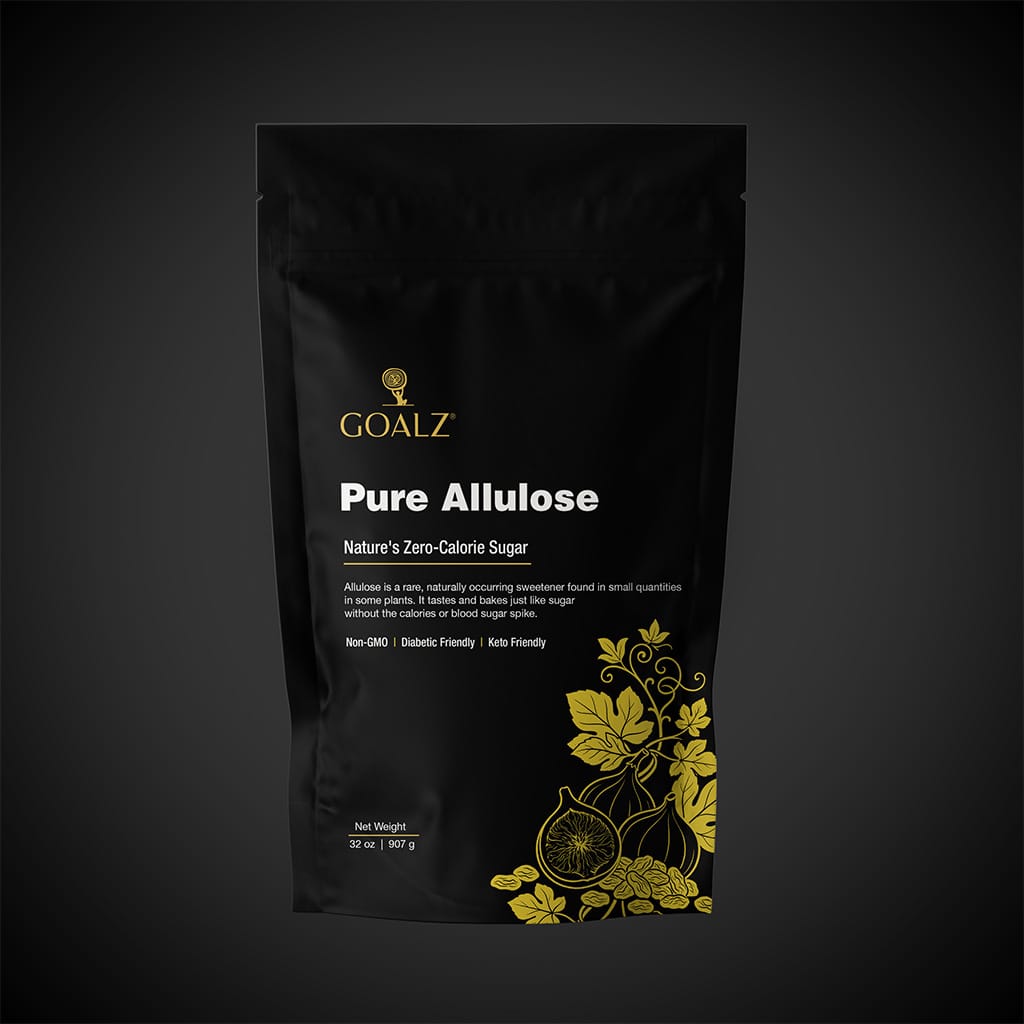
- GOALZ Allulose Sweetener: the same non-GMO allulose we use in our chocolate.
- Sugar-Free Chocolate Chips — Allulose Sweetened: for baking.
- Allulose chocolate bars: cocoa + allulose, nothing else.
- Shop all sugar-free chocolate
Frequently asked questions
Can dogs have allulose?
Early animal research suggests allulose is not toxic to dogs the way xylitol is. Xylitol is extremely dangerous to dogs and is the sweetener behind most pet-poisoning emergencies. But research on allulose in pets is limited, so the safe answer is: don't feed your dog allulose-sweetened products, and never anything containing xylitol. (And chocolate itself is toxic to dogs. GOALZ bars are for you, not the pup.)
How many calories does allulose have?
About 0.4 kcal per gram, roughly 90% fewer than sugar. The FDA allows this 0.4 kcal/g value on US labels.
Does allulose count toward net carbs?
No. It appears under Total Carbohydrates on some labels but is excluded from sugars and is not metabolized for energy, so subtract it fully when calculating net carbs.
Does allulose affect GLP-1 or appetite?
Early research, mostly in animals with some small human studies, suggests allulose may influence GLP-1 secretion and appetite signals. An 18-person controlled human study found 25 g intragastric allulose stimulated GLP-1, CCK, and PYY. Clinical effects on appetite or weight remain unproven.
Is allulose natural or artificial?
Natural in origin: the same molecule found in figs, raisins, and maple syrup. Commercial allulose is produced from corn-derived fructose using enzymes: a conversion process, not artificial synthesis.
Sources
- FDA guidance for industry on allulose labeling (exclusion from Total/Added Sugars, 0.4 kcal/g), 2019, finalized 2020.
- Han et al., "Gastrointestinal Tolerance of D-Allulose in Healthy and Young Adults," Nutrients, 2018. PMC6315886
- Braunstein et al., "Allulose for the attenuation of postprandial blood glucose," PLOS ONE, 2023 meta-analysis. doi:10.1371/journal.pone.0281150
- "Research Advances of D-allulose" review (absorption/excretion data). PMC8467252
- EFSA, "Safety of D-allulose as a novel food pursuant to Regulation (EU) 2015/2283," EFSA Journal, June 2025. doi:10.2903/j.efsa.2025.9468
- FSANZ approval of D-allulose in Australia/New Zealand.
- 48-week long-term tolerance study of daily D-allulose intake (Japan).

Leave a comment